Understanding your dog’s real age can make a huge difference in how you care for them. For years, many people thought one dog year equals seven human years, but modern research has shown that it’s not so simple. To take better care of your furry friend, it’s important to learn how to calculate dogs age using accurate, science‑based methods. This way, you’ll know when they are entering different life stages, can anticipate health needs in advance, and adjust nutrition, exercise, and vet check schedules accordingly.

Why Traditional Age Conversion Is Flawed
Dogs mature much faster in their early years than they do later in life. A one‑year‑old dog may be physically equivalent to a human in their late teens, and by age two, they might be closer to a person in their mid‑twenties. Larger breeds often age faster and live shorter lives, while smaller breeds typically have slower aging and longer lifespans. This variation means a single formula for all dogs will not give a truly accurate picture.
How to Calculate Dogs Age Accurately
Start by finding your dog’s chronological age in years
Consider the breed and size, because smaller breeds age slower and larger breeds age faster
Use a more modern equation such as: Human Equivalent Age ≈ 16 × ln(Dog Age in Years) + 31
This formula accounts for the rapid aging in the early years followed by a slower pace later on. The “ln” stands for natural logarithm, which helps represent changes over time more precisely
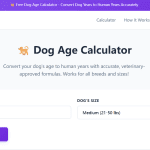
If you don’t want to calculate manually, use a reliable dog age calculator online for quick results
Breed and Size Adjustments
Small breeds like Dachshunds or Maltese often don’t reach senior status until around 10 years old
Medium breeds like Border Collies or Beagles typically shift into middle age at 7–8 years
Large and giant breeds such as Labradors, German Shepherds, or Great Danes may become seniors as early as 5–6 years
Recognizing these differences helps you prepare for changes in activity levels, dietary needs, and vet care frequency
Benefits of Knowing the Correct Age Conversion
Plan preventive health checkups before problems appear
Adjust diet and exercise to match the dog’s biological stage rather than just their actual birth age
Monitor behavioral changes like reduced playfulness or increased rest more effectively
Improve quality of life by anticipating senior care early
Common Mistakes to Avoid
Relying on the old 1:7 rule without considering breed size
Ignoring signs of aging because the chronological age seems “young”
Failing to reassess your dog’s needs every year
Learning how to calculate dogs age using modern science rather than outdated rules ensures you give them the care they deserve. Breed, size, and individual health all play a role in determining their true stage of life. By understanding their human age equivalent, you can make thoughtful decisions about diet, exercise, and medical attention, helping your dog enjoy a longer, healthier, and happier life with you.