Understanding how to calculate baby’s age is more important than many parents realize. Whether it’s for tracking developmental milestones, scheduling pediatric visits, or planning the right nutrition stage, knowing your baby’s exact age in months and weeks can make day‑to‑day decisions much easier. Many first‑time parents rely on rough estimates, but accurate age calculation allows you to align more precisely with medical guidelines and growth charts.

The simplest way to calculate a baby’s age is to count from the date of birth, but doing this mentally often leads to mistakes, especially when dealing with months that have different lengths or accounting for leap years. A practical and reliable method is to use an online age calculator or a spreadsheet formula. For example, in tools like Google Sheets or Excel, you can input the birth date in one cell and use functions such as DATEDIF to return the number of months and days since birth. This not only saves time but ensures accuracy.
When it comes to newborns, pediatricians often recommend tracking age down to the exact week for the first few months. This is because growth and development occur rapidly, and small variations can affect feeding schedules, immunization timing, and developmental assessments. To get weeks, you can subtract the birth date from today’s date, then divide the difference in days by seven.
Parents of premature babies need to consider “corrected age,” which adjusts for the number of weeks early the baby was born. This helps measure progress against developmental benchmarks designed for full‑term infants. For example, if your baby was born eight weeks early, you subtract those eight weeks from their chronological age to get the corrected age. This calculation is especially important for the first two years of life when milestones can appear delayed but are perfectly normal for preterm babies.
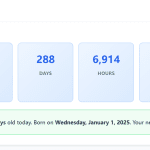
Using an online calculator designed for infants is often the fastest option. It can instantly show age in years, months, weeks, and even days, eliminating guesswork. Many of these tools also offer printable charts so parents can track changes over time. This is helpful for doctors’ visits as it gives clear documentation of your baby’s growth path.
Accuracy in age calculation isn’t just about numbers — it directly impacts health management. Vaccination schedules, dietary transitions, and activity recommendations are all age‑specific, so knowing the exact age ensures these actions happen at the right time. It also helps parents spot potential developmental delays early, which can lead to timely interventions.
In short, knowing how to calculate baby’s age with precision means more confident parenting and better care. Whether you use online tools, your smartphone, or spreadsheet formulas, keeping your baby’s age documented in the right units ensures you never miss an important milestone or medical schedule.