If you are bringing home a new pet — or planning for the one you already have — one of the first questions that comes up is how long they will be around. Lifespan shapes everything: the size of the food budget, the kind of veterinary care you should plan for, and the lifestyle adjustments you will make over the years. The honest answer is that lifespans vary enormously between species — a hamster might be with you for two years while a parrot can outlive you. Here is a practical, species-by-species breakdown of how long common pets actually live, what affects those numbers, and how to plan accordingly.
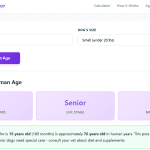
Once you know a pet’s expected lifespan, the next question most owners ask is how that compares to a human age. You can convert your pet’s age into human years with our pet age calculator — but first, let’s look at the raw numbers.
Average Lifespans of Common Pets
The table below shows realistic average lifespans for well-cared-for pets. These are averages — individual animals can live considerably longer with good genetics and care.
| Pet | Average Lifespan | Can Reach | Key Factor |
|---|---|---|---|
| Dog (small breed, e.g. Chihuahua, Dachshund) | 12–16 years | 18+ years | Smaller dogs generally outlive larger ones |
| Dog (medium breed, e.g. Beagle, Bulldog) | 10–13 years | 15 years | Weight management matters most |
| Dog (large breed, e.g. Labrador, German Shepherd) | 8–12 years | 13 years | Joint health and heart disease risk |
| Cat (indoor) | 13–17 years | 20+ years | Indoor cats live far longer than outdoor cats |
| Cat (outdoor access) | 7–10 years | 12 years | Traffic, predators, and disease exposure |
| Rabbit | 8–12 years | 14 years | Diet (unlimited hay) and dental care |
| Guinea Pig | 5–7 years | 8 years | Vitamin C intake and companionship |
| Hamster (Syrian) | 2–3 years | 3.5 years | Short lifespan is normal — plan for it |
| Rat | 2–3 years | 3.5 years | Tumors are common in older rats |
| Budgerigar (Budgie) | 7–12 years | 15 years | Diet variety and mental stimulation |
| Cockatiel | 15–20 years | 25 years | Lifelong commitment — they outlive many dogs |
| African Grey Parrot | 40–60 years | 70+ years | Can outlive their owner — plan an inheritance |
| Goldfish | 10–15 years | 20+ years | Tank size and water quality are everything |
| Betta Fish | 3–5 years | 7 years | Heated, filtered tank — not a bowl |
| Leopard Gecko | 10–15 years | 20 years | Proper heating gradient |
| Red-Eared Slider (Turtle) | 20–30 years | 40+ years | Major long-term commitment |
Why Lifespans Vary So Much
Three factors explain most of the variation between species. Body size matters in mammals: within dogs, small breeds consistently outlive large breeds by several years, likely because large breeds age faster at the cellular level. Metabolic rate correlates with longevity across species — small, fast-metabolizing animals like hamsters burn through life quickly, while slow-metabolizing animals like parrots and tortoises take decades. Environment is the factor you control: indoor cats live roughly twice as long as cats allowed to roam outdoors, and the same principle applies to fish (tank size and water quality) and birds (diet and enrichment).
What Actually Extends a Pet’s Life
- Weight control: Studies in dogs show that keeping pets lean adds 1.8–2.5 years of life versus allowing them to be overweight.
- Spaying and neutering: Reduces cancer risk and eliminates pregnancy complications in most species.
- Regular veterinary care: Annual checkups catch dental disease, kidney issues, and tumors early — the difference between treatable and fatal.
- Species-appropriate diet: Unlimited hay for rabbits, high-quality protein for cats, and the correct staple for reptiles. Wrong diets are the top cause of premature death in exotic pets.
- Mental and physical enrichment: Exercise and stimulation reduce stress-related illness and obesity.
Planning for the Lifespan You Signed Up For
Before choosing a pet, match the lifespan to your situation. A hamster or rat is a reasonable first pet for a child who will leave for college in a few years. A dog or indoor cat is a 12–17 year commitment that will follow you through jobs, moves, and relationship changes. A parrot or turtle is a multi-decade responsibility — many owners arrange for their care in their will. Knowing the expected lifespan before you adopt prevents the two most common regrets: rehoming an animal you weren’t ready to keep for that long, and being caught off guard by how short a small pet’s life can be.
When you do bring a pet home, tracking its age in human terms helps you notice the life stages — puppy and kitten years, adulthood, and senior care — so you can adjust food, exercise, and checkup frequency at the right time. Use our free pet age calculator to convert your pet’s age to human years in seconds, then use the result to guide when to start senior bloodwork, switch to senior food, or increase dental cleanings.
The Bottom Line
There is no single answer to how long a pet lives — the range runs from two years for a hamster to 60+ for a parrot. The practical takeaway is to choose a pet whose lifespan fits your life stage, then do the three things proven to add years: keep them lean, keep them indoors or supervised, and keep up with veterinary care. Lifespan is partly written in their genes, but a surprisingly large part is in your hands.