TL;DR / Summary: Drinking age depends on the country and sometimes on the type of alcohol, and the rule is applied on the day, not on the date you arrived. A birthday that falls mid-trip changes what you may legally order. Check the threshold for the specific place and product before you book, and carry a passport rather than relying on a foreign licence.
Two questions: where, and on which day
The first question is jurisdiction. The second is the date, because age is evaluated at the moment of purchase or service, not at the border. A trip that spans a birthday therefore has two different answers.
Some countries apply the rule at midnight local time, which means a birthday begins when the clock passes midnight rather than when the plane lands. A late flight on the day before can matter more than the itinerary suggests.
Neither question is answered by your home country’s rules. Travellers sometimes assume that their own threshold travels with them, and staff in another country have no reason to accept that argument.
Countries with one threshold and countries with two
Many places use a single age for all alcohol. Others split by strength or category, which produces the confusing situation where you can legally buy beer but not spirits on the same evening.
Parts of Europe set sixteen for beer and wine in a supervised setting and eighteen for spirits. Japan sets twenty for everything, and South Korea uses nineteen under its international-age system. Canada varies by province, and the United States is uniformly twenty-one.
Federal systems are the hardest to generalise about. Canada, Australia, and India each contain jurisdictions with different rules, so “the country’s drinking age” is not a reliable phrase for any of them.
The birthday that falls in the middle of a trip
Plan around the date rather than the destination. If you turn the relevant age on the fourth day of a week-long trip, the first three days are governed by the younger age and the last four by the older one.
Staff may not realise the date has changed, so carry identification and be ready to explain. A passport shows the date plainly; a foreign driving licence may show it in a format the door staff do not recognise at a glance.
Booking a celebration for the evening of the birthday is fine, but do not assume the venue will treat midnight as a formality. Some establishments apply the rule when the order is placed, and a drink ordered at 11:55 pm belongs to the previous day.
Documents that get accepted and documents that do not
A passport is the document most likely to be accepted everywhere, because it carries a photo, a date of birth, and a machine-readable format that staff have seen before.
National identity cards work well within their own region and less well elsewhere. Driving licences are inconsistent: some venues accept them, some do not, and a licence in a script the staff cannot read is effectively no document at all.
Photocopies and phone photos are usually rejected. If the passport is in a hotel safe, carry it or accept that a purchase may be refused even when you are clearly old enough.
Buying in a shop versus ordering at a table
Retail and hospitality are regulated differently in many places. A supermarket may be allowed to sell at eighteen while a bar requires twenty-one, or the reverse, and the same person can be legal in one setting and not the other.
Shops also apply hours restrictions that have nothing to do with age. Being refused at eleven at night may be a licensing rule about trading hours rather than a doubt about your birth date.
At a table, the decision often belongs to the server, who may apply a house policy stricter than the law. Arguing with the policy rarely changes the outcome, and asking politely for the rule is usually faster.
Cruise ships and border areas
Ships sailing international waters often set their own policy, typically aligning with the flag state or the departure port. That policy can change when the ship is in port, because local law may then apply.
Border regions create genuine ambiguity: a town near a frontier may serve customers from both sides, and staff may apply the stricter of the two rules to avoid trouble. Age checks can be more conservative than the statute suggests.
If a stopover matters, check the rule for that specific port rather than for the country as a whole. A single day ashore can have a different threshold from the ship.
Checking the rule before booking
Look for the official tourism or government page for the specific jurisdiction, and read the section on alcohol rather than the general entry requirements. Age limits are rarely mentioned in visa information, which is about entry, not consumption.
Note whether the threshold applies to purchase, possession, or consumption, since those can differ. A place that permits possession at eighteen may still refuse service, and a place that permits service may restrict where the drink can be consumed.
Write the relevant dates next to the itinerary: arrival, birthday, departure. That single line shows at a glance which days are governed by which rule and prevents a surprise at the bar.
Planning the trip around the birthday
Find the jurisdiction, find the threshold for the product you care about, and apply it to each day of the trip rather than to the trip as a whole. Carry a passport, expect house policies to be stricter than the law, and check port-specific rules on a cruise.
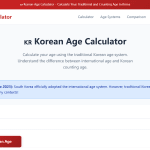
Use an age calculator to confirm the exact age on each travel date if the birthday is close to the threshold. The arithmetic is simple, but the date is easy to misread after a long flight.
None of this guarantees service, because door staff make judgement calls. It does mean you know the rule before you are standing at the counter trying to work it out.